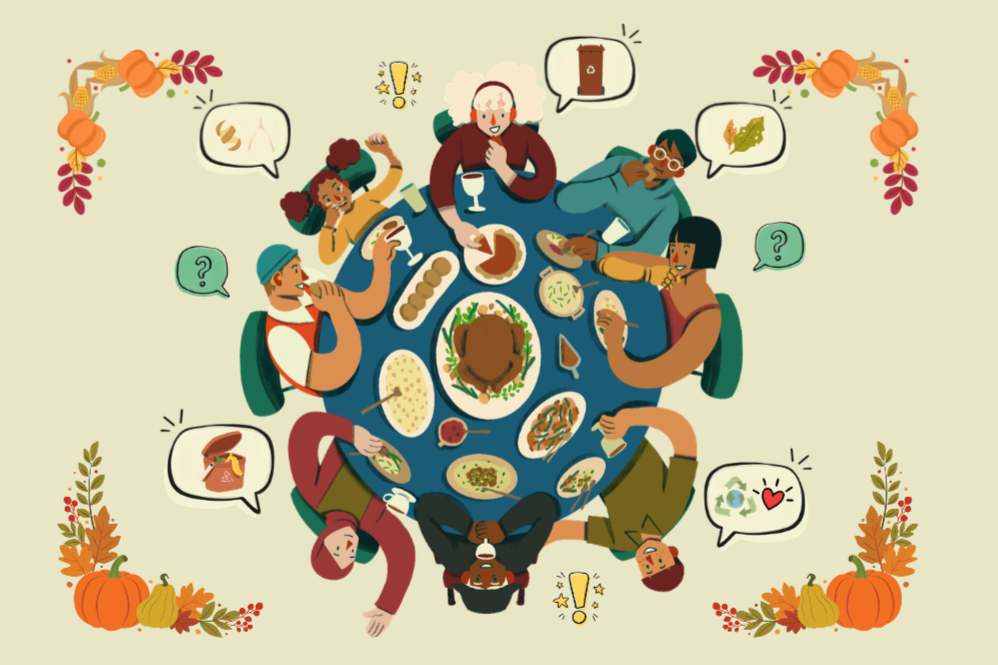
With curbside composting now mandatory across all five boroughs, Thanksgiving is a great time for New Yorkers to turn food scraps into something useful instead of throwing them in the trash. We know that food, family and friends take the center stage, however with all these gatherings comes a lot of potential food waste. While we joke online about family gatherings sometimes coming with uncomfortable conversations, reducing food waste is something that shouldn't cause too much drama over the family dinner. So when your Aunt Zoe pulls out her world famous pumpkin pie, you can quote the 2026 Trash Academy Organics Module to let them know that “Organics are a big piece of the NYC trash pie,” and it's time we start diverting it!
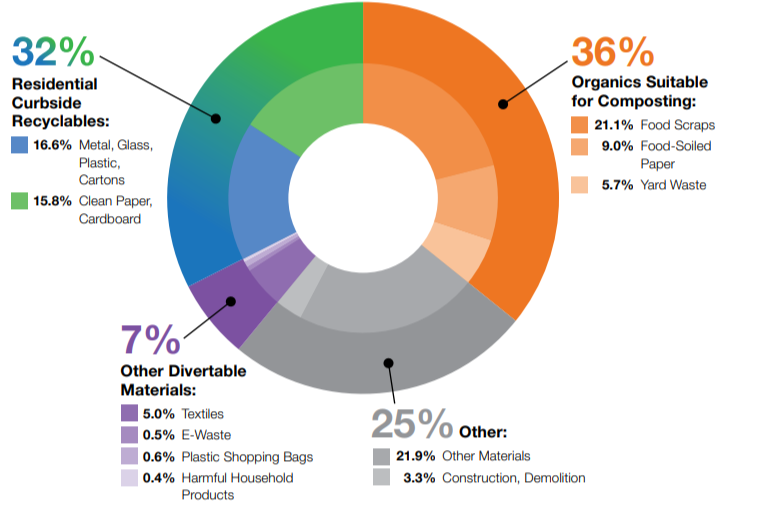
The 2023 DSNY Waste Characterization Study:
Results — Residential Collections
While about 36% of NYC residential waste is organic material, the IBO found in 2025 that only 2.4% of residential waste was collected as organics. NYC has made progress, but there's still a lot of food waste getting mixed into the trash. With curbside composting in its second citywide year and with autumn being when DSNY collects the highest volume of organic waste (due to increased yard waste), we can encourage our families and friends to separate their food scraps and bag them with the yard waste this year. Turkey bones, potato peels, vegetable scraps, eggshells, pumpkin scraps, leftovers, and greasy uncoated paper plates can all be diverted by DSNY.
So here's some curbside composting tips and answers to frequently asked curbside composting concerns so you’re prepared for your Aunt Zoe or other family & friends who are still having trouble participating in curbside composting!
Tip 1: You don’t gotta get fancy: How to collect food scraps in your NYC apartment?
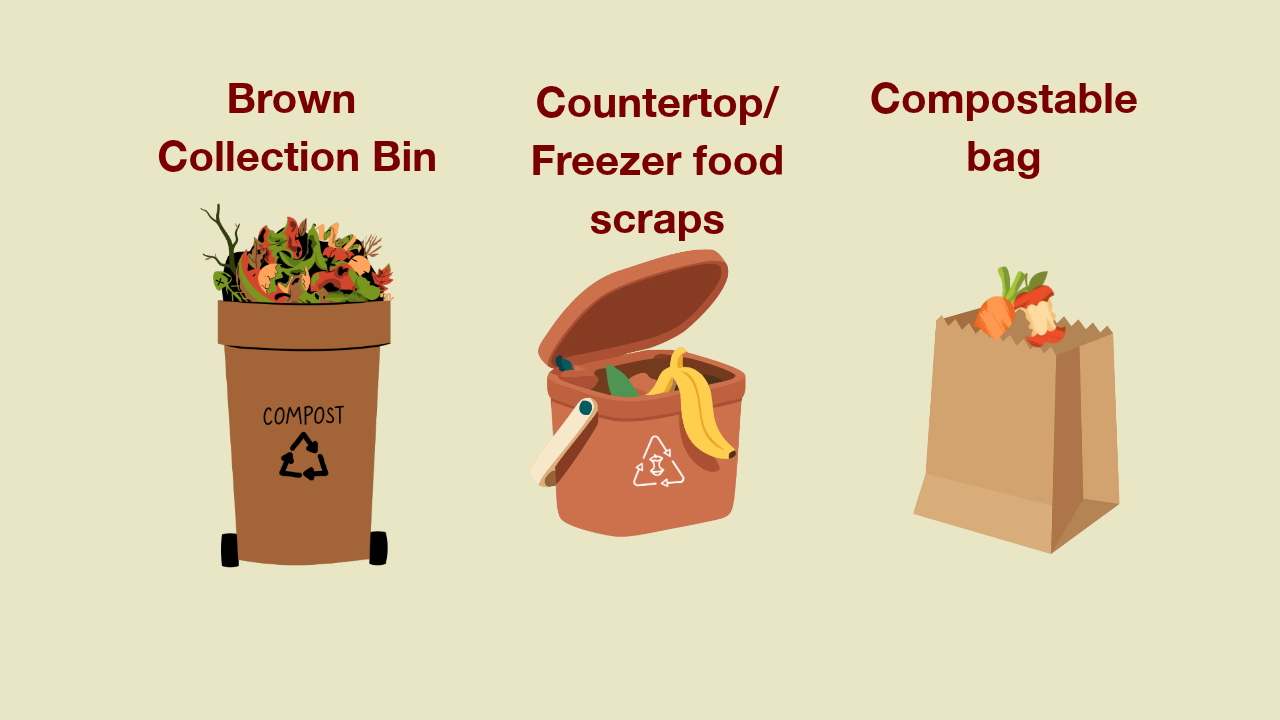
The goal is to divert any amount of food waste, you could get a dedicated counter bin or brown bin, however on a budget any tie-able bag or sealable tub to collect your scraps works just fine.
Tip 2: Ooo You smell that. It stinks, right?: How to Prevent compost odors and pests?
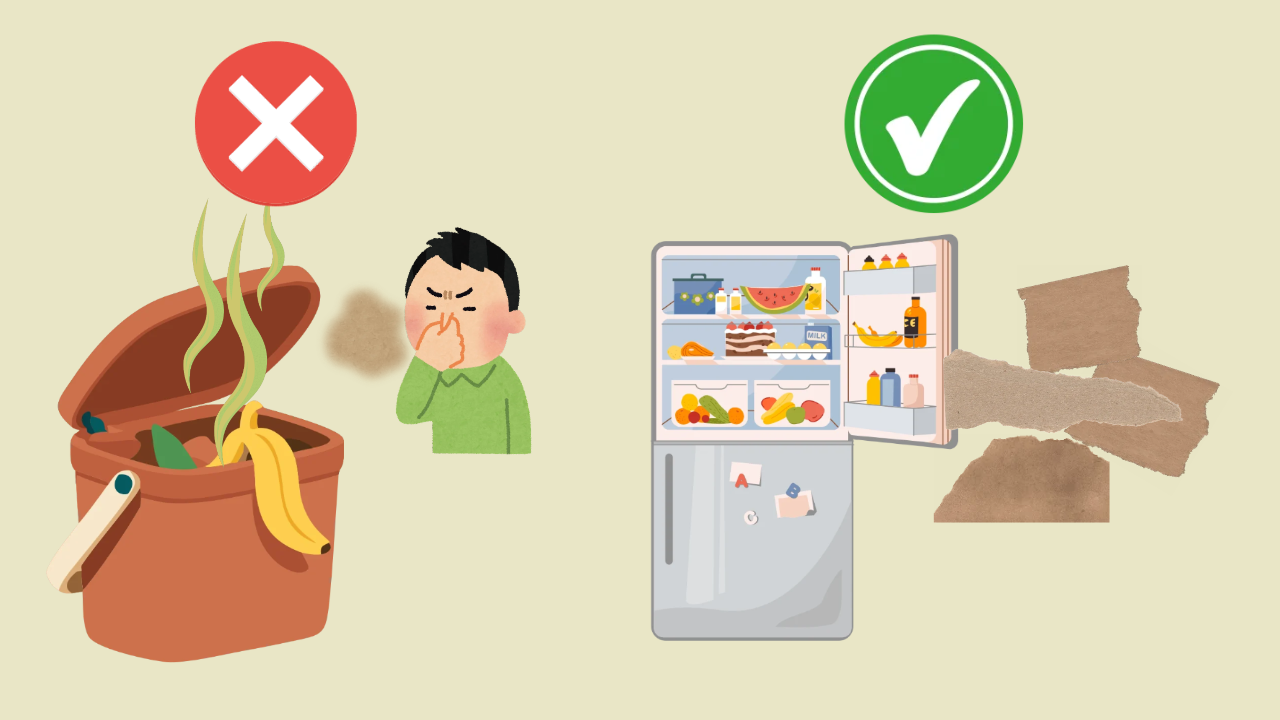
You can prevent the smell by putting the bin in the freezer and make sure you're not just adding food scraps. A healthy amount of dry material such as food soiled paper, ripped brown paper lunch bags, and even yard waste can help absorb the moisture at the bottom. NYC curbside compost is collected weekly on the same day as recycling.
Tip 3: As long as it's not a black bag ur good to go: What bags can you use for NYC curbside composting?
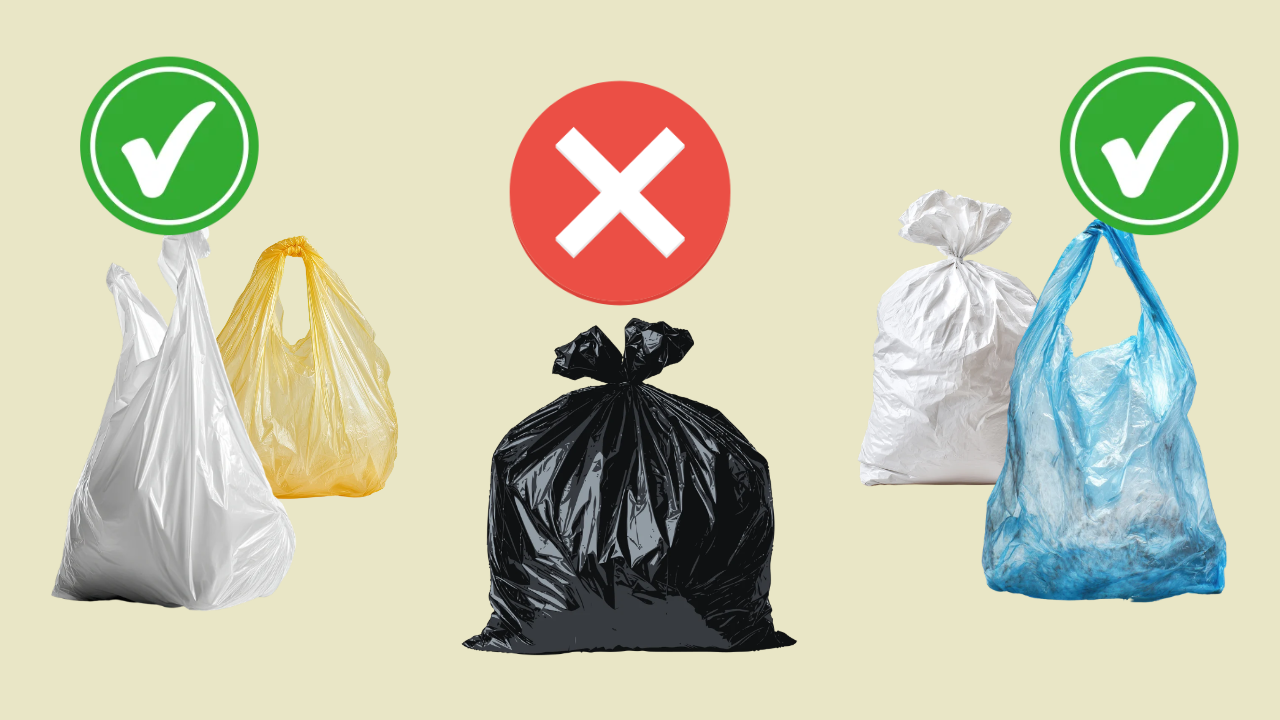
Compostable bags are cool but if that's not in your budget any clear recycling bags work best for lining your collection bin! Your sanitation worker can’t confirm that waste is food scraps if it's in a black bag, so steer clear of those! Never set your organics bag on the curb alone either. Doing so can attract all kinds of pests that could rip your bag and start feasting on your thanksgiving scraps. Make sure to bag and bin your organics!
Tip 4: No brown Bin? No problem!: Do you need a brown bin to compost in NYC?
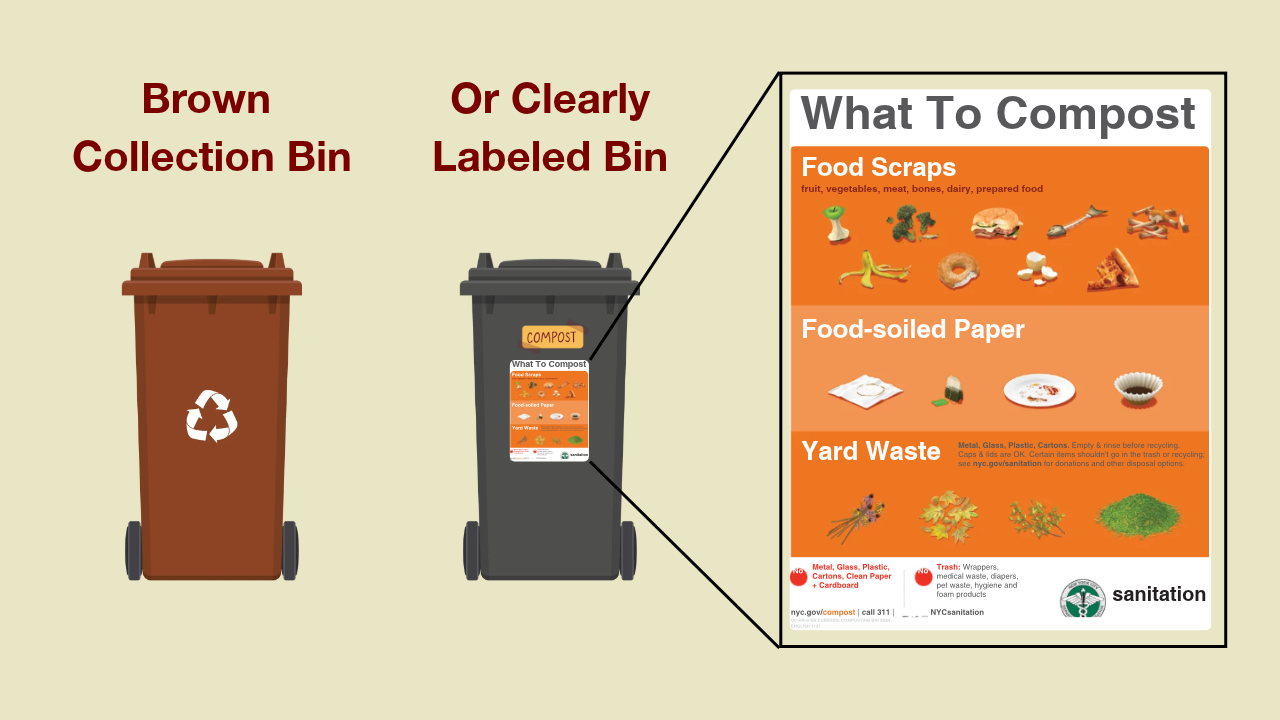
So you/ your landlord missed the free DSNY bin hand out era and all your neighbors got their brown bins and you're wondering if you can even participate if your building is still waiting for one. Well you can! As long as your food scraps are in a designated, clearly labeled “Organics and yard waste” bin (and bagged) DSNY will pick up your scraps on your recycling day! Make sure your bin has a secure lid to make your food scraps extra pest proof!
Tip 5: Know your waste stream! — What can actually go in NYC’s curbside compost bin?
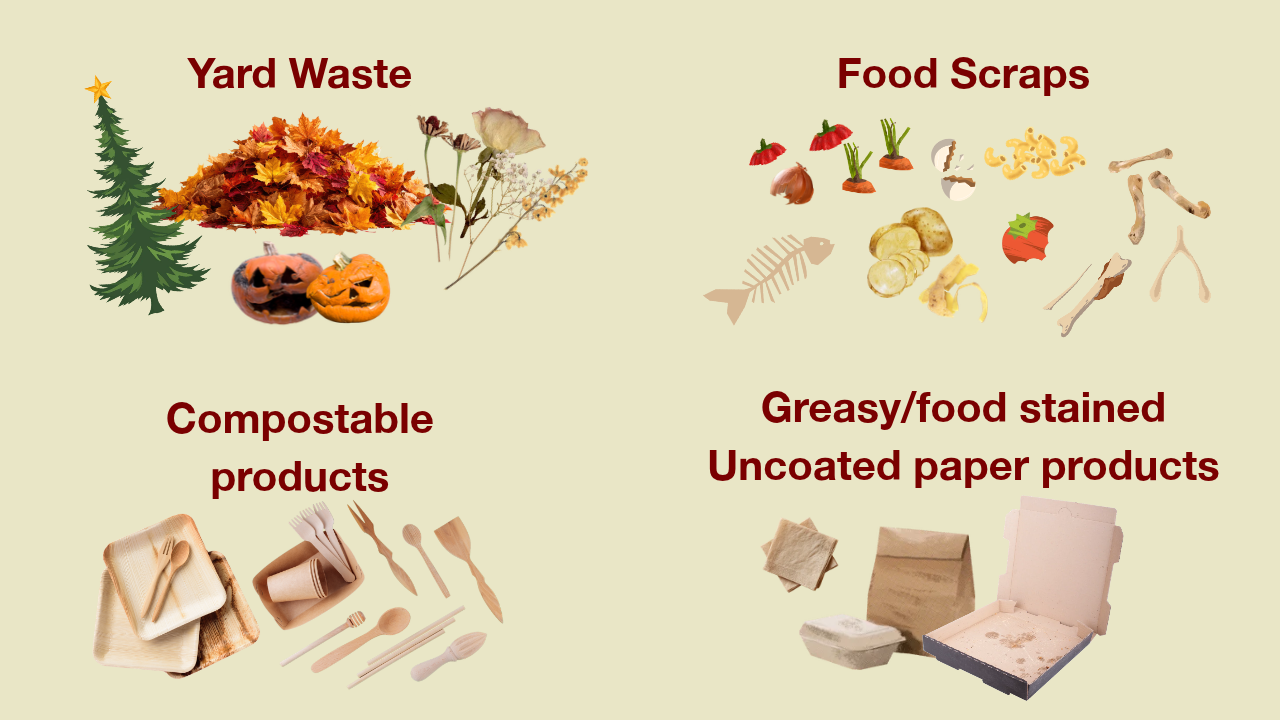
We know organic materials like food scraps and yard waste is a big category. You can double check on the DSNY website to confirm whether or not your items belong in the bin. It's best practice to remove your fruit stickers, to only throw in only uncoated, food soiled paper products and remove any other plastic packaging before throwing them together to be collected.
DSNY Curbside Composting Guide — what can and cannot be composted.
DSNY Composting FAQs — bins, bags, smells, and pests.
NYC311 Curbside Composting — collection rules and additional guidance.
By diverting food scraps, the City can significantly reduce landfill use, cut greenhouse gas emissions, improve urban soil and green spaces, reduce pests, and create healthier neighborhoods for residents. After all if we spent all this time making all this food with love, we can give some love back to the planet by keeping methane producing food scraps out of our landfills.
If you want to learn even more about organic recycling in NYC, check out NYC Trash Academy and learn how NYC's waste system works, where food scraps go after collection, and how to make a difference in your neighborhood