The Maker’s Resistance Q&A
The Maker’s Resistance is an art and education collective working with the Sanitation Foundation to reduce overconsumption and materialistic behavior among Gen-Z young adults in NYC through values-aligned, co-creation workshops.
Emma Delahanty talks The Maker’s Resistance with Yajá Mulcare
Emma: “Why is this a topic worth dedicating your thesis to?”
Yajá: “I know I like to shop, but my room is crowded with things I haven’t touched in months.” Yajá started watching YouTube around the holidays and noticed lots of influencers were all doing the same thing: buying things no one needs in bulk. “Their houses stopped looking like places they lived in and started looking like retail stores. It was frustrating me, so I started following these influencers on TikTok who were de-influencing their viewers from buying into the latest trends. I would see these new items come out, like Labubus, for instance. People rush to the stores and buy out the entire stock either for themselves or to upcharge people. They then have no regard for where these items end up later on when the trend cycle is over.”
“I see more young people trying to be conscious of their environmental impact and thinking critically about the lifespans of the items they purchase,” but she says, “I also see people who give into these meaningless trends because they think they need these throw-away items to fit in.”
Emma: “What was your inspiration for this game and thesis project? How did you decide to focus on overconsumption as well as your other impact areas, NYC has lots of environmental problems, why these ones?”
Yajá: “I play a lot of role-playing games and some of my favorite games deal with political and societal changes that the characters are responsible for making.” Yajá says she sees it as a challenge when the character you play is responsible for creating and sustaining actual long-lasting behavioral changes in society. “One of my favorite shows focuses on a character that is committed to repurposing and repairing while he is surrounded by those who love the convenience of disposable items. He uses his repairing skills and knowledge to try to inspire others around him to be less wasteful.” Yajá credits Trash Academy with educating her on the waste problems that New York deals with, but also gave a nod to Trash Academy participants who she said gave her ideas for possible solutions to use in her game. “The discussion boards gave me some of my best inspiration for real-world solutions to our never-ending waste problems. I was inspired by the advocacy I saw coming from the discussion boards. I didn't expect that from New Yorkers, but it’s very clear this is an issue people think about a lot.”
Emma: “Based on your timeline and research on the trends of overconsumption, how far into the future is this game taking place?”
Yajá: “I saw a statistic from a few years ago that stated the natural environment would be going through a biodiversity catastrophe by 2050 unless concrete action is taken immediately. That was a while ago and things definitely haven’t gotten any better. I don’t think New York will look like it does in my game in 2050,” she said. “However, I can sadly see natural spaces becoming dumping sites and just being inundated with relics of past trend cycles.”
Emma: “Where do you hope this game will be implemented and what are you hoping it will solve/draw attention to?”
Yajá: “I want to see my game in schools, libraries, and out in community spaces. I can imagine pitching this game to developers, or bringing it to climate talks during climate week. I could even see it as a display in The Climate Museum. The main purpose of the game is to highlight individual environmental impact and what we can do to consume more responsibly,” she said. “I want the game to inform people about what actions they can take to make New York a more sustainable city.”
Emma: “How do you want the game to influence participants and their consumption habits?”
Yajá: “I want participants to think twice before every purchase and pay attention to the types of materials and the fabrics that they buy because some materials last a lot longer in our environment than others. I really like repairing and repurposing the things I own and I hope the game makes people more conscious about the amount of salvageable things they are sending to landfills.”
Emma: “How do you want the participants of The Maker's Resistance to feel about our throwaway culture of excessive convenience and the impacts it has on communities who have long faced disproportionate environmental burdens?”
Yajá: “I want people to feel like they are advocating for change they want to see and to convince people to stop buying everything new. I want people to be more self-aware about how much they are consuming and I want people to feel supported in their journey to buy less.” Yajá says she is not trying to make people feel guilty about their consumption habits. “I just want them to think about what happens to their purchases after they discard them and the people it ends up affecting.”
Emma: “Has this thesis informed/changed any of your consumption habits?”
Yajá: “The research I’ve completed for this thesis has shown me just how out of hand overconsumption has gotten. I’m committed to shopping second-hand and I love seeing what people create out of the materials they already have. I’m also always thinking about the longevity of the items I’m buying.”
Emma: “What do you hope people will walk away with after viewing your thesis showcase and participating in The Maker’s Resistance?”
Yajá: “I want people to understand why overconsumption is an issue that we must solve now. I want viewers to see the passion and the purpose behind my thesis and I want individuals to walk away with questions for themselves surrounding their consumption habits as well as what they can be doing to contribute to fixing this issue.”
Emma: “What are some of your favorite examples of creative resistance?”
Yajá: “I’m a member of Made in NYC, which is a non-profit that supports local crafters with free repurposing and repairing workshops and creative services to help makers promote their projects.
Emma: “What are you planning next career-wise? How will you continue the creative resistance?”
Yajá: “I’m not sure yet, but I’d love to collaborate with Made in NYC and the eco-artist collective Field Meridian to promote and circulate my game, maybe even conducting workshops with interested participants.” Yajá says she wants to keep up with game design after graduation, “I like the idea of using it to brainstorm sustainable solutions for environmental and social impact issues, and it’s a great way to bring new and different solutions to the table.”
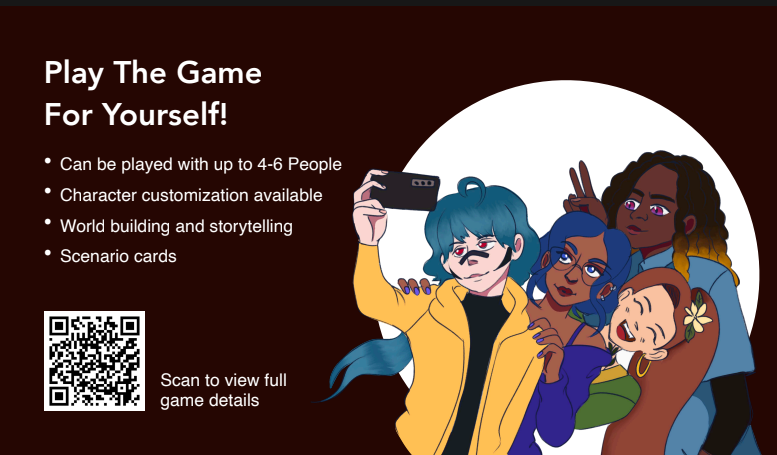
To play Yajá’s game Operation Save NYC, scan the QR code or click the link!
To get in touch with Yajá, email her at: ymulcare@sva.edu or visit her website!